Research editor: Nicholas Bauer, Founder & Research Editor · Updated October 16, 2026
The quick answer
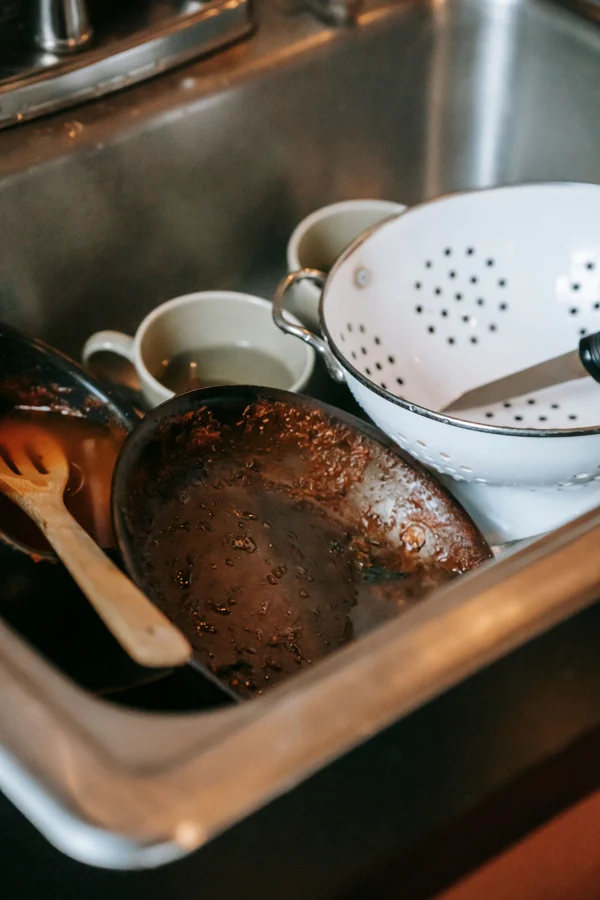
With one small sink, create a clear sequence rather than trying to hold the whole meal at once. Sort the load, wash a manageable batch, rinse with clean water and move it to a clean drying area. Keep handwash restrictions and sharp tools visible.
Give the dishes three places to go.
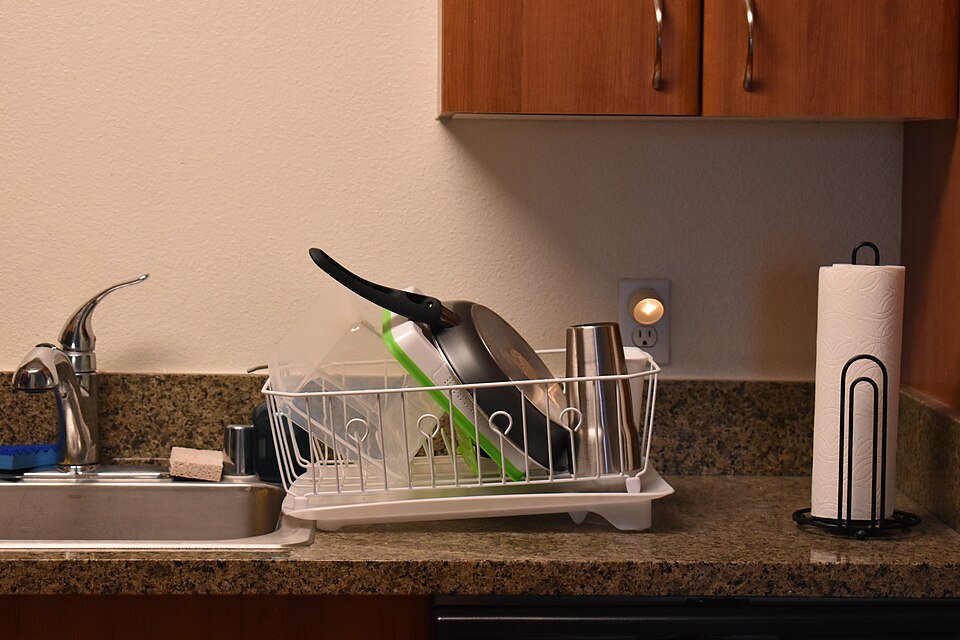
Think of the counter and sink as a short route: dirty landing spot, working basin, clean drying spot. Reverse the layout if the other direction suits your faucet and available counter. The zones are temporary jobs, not three accessories you need to buy.
Example: two plates, two mugs, utensils and one pan
This is a suggested sequence, not a measured cleaning-time claim. First clear enough drying space for the plates and mugs. Scrape the plates and keep the pan out of the basin while you wash and rinse the smaller items. Handle any sharp tool separately, where you can see it. Once the smaller items are draining, the basin is available for the pan without stacking clean dishes back into it.
If the drying area fills up, pause the next batch and make a clean destination available. If the pan still does not fit, use the large-pan washing guide instead of forcing it under the faucet.
Keep the dirty queue on a stable, washable surface you can reach, and reserve the counter beside the sink for clean dishes. A movable basin can help organize a small batch, but do not put the dirty queue on a hot stovetop or block the place you need for rinsing.
Clear the destination first
Empty yesterday’s clean dishes from the drying area before starting. If there is nowhere to put the first washed cup, you will end up balancing it on the counter or returning it to the crowded basin.
Set knives and fragile items aside in a visible, controlled place. Do not bury a sharp blade in opaque wash water or under a stack of plates.
Choose a washing method that fits the basin
The American Cleaning Institute describes both diluted detergent in a sink or dishpan and detergent applied directly to a suitable cleaning tool or item. Follow the product’s dose directions. More foam is not proof of better cleaning.
A removable basin can separate wash water from the sink, but it must leave enough room for your actual routine. If it blocks the drain or prevents rinsing a large item, a smaller basin or a different sequence may work better.
Use a short batch plan
- Remove leftover food before washing.
- Separate items that cannot soak or need special care.
- Wash a manageable group with the appropriate product and tool.
- Rinse with clean water rather than leaving soap on the dishes.
- Move clean items to their drying position without crossing a dirty pile.
Common bottlenecks and simpler fixes
| Bottleneck | Try first |
|---|---|
| A large pan fills the entire sink | Handle it separately after clearing smaller dishes. |
| Clean cups have nowhere to go | Reset the drying area before starting another batch. |
| The faucet cannot reach around a basin | Reconsider basin size and placement. |
| Everyone adds dishes while you wash | Agree on a separate dirty landing spot during the task. |
Do not soak everything together
Wood, seasoned cookware and some constructed bakeware have soaking restrictions. Keep the material-care instructions in view when sorting. A single-sink routine should not turn into one long bath for every object in the kitchen.
For a heavy pot, consider how you will empty and lift it before filling it with water. If lifting is difficult, choose a manageable washing arrangement instead of trying to carry a full basin to another room.
Reset the tools as well as the dishes
Finish by cleaning the sink area and caring for the brush, sponge or cloth according to its instructions. Put cleaning tools where they can dry. If the only storage spot is inside a wet cup, the routine is not quite finished.
After a few meals, note the recurring obstruction. It may be one oversized pan, a crowded drying spot or a poorly fitting basin. Solve that specific problem before buying a collection of sink accessories.
Common questions
Do I need two basins to wash dishes?
No. A single sink can work with a deliberate washing, rinsing and drying sequence.
Should I soak all dishes overnight?
No. Some materials restrict soaking, and an overnight pile can block the next use of the sink.
Sources & scope
The linked guidance supports product and care facts; the layouts and worked examples are our practical suggestions. Match the exact item and current instructions. We have not performed durability or cleaning tests on these products.