Research editor: Nicholas Bauer, Founder & Research Editor · Research checked October 6, 2026
The quick answer
Give dirty dishes a defined temporary landing place, keep the sink usable and agree on when clean dishes are put away. Separate handwash items and sharp tools clearly. A shared kitchen works better when the next person can tell what is dirty, drying or ready for storage.
Separate three statuses
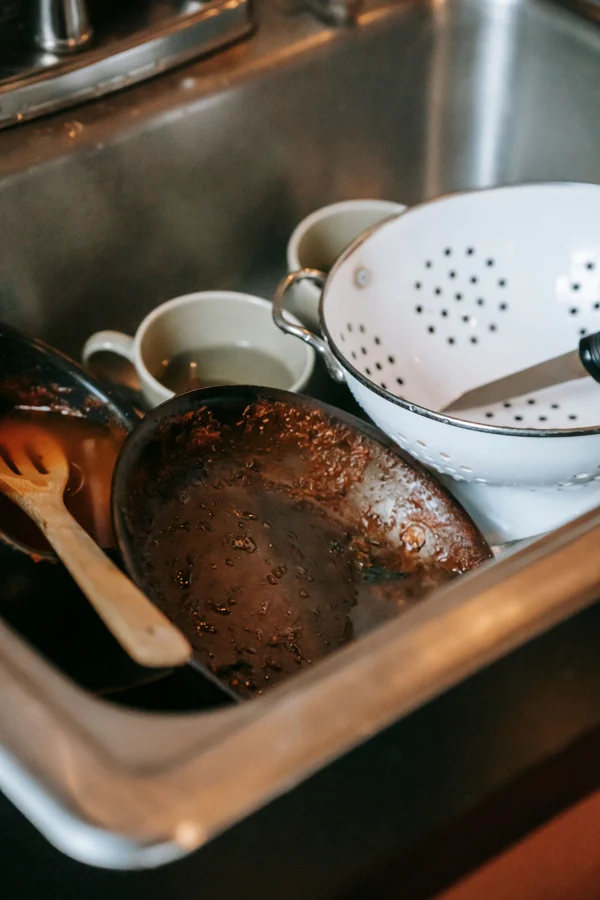
A crowded counter often contains dirty dishes, newly washed dishes and clean dishes nobody has put away. If those groups blur together, someone may rewash clean items or place food on a dirty plate.
| Status | Where it belongs | What ends the stage |
|---|---|---|
| Dirty | A stable, limited landing area. | Washing by the appropriate method. |
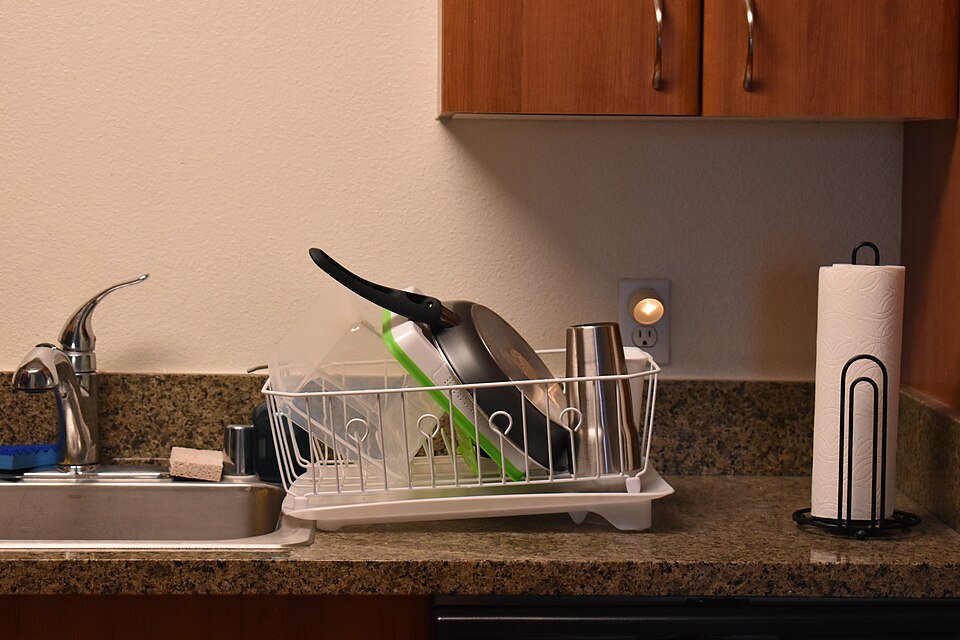
| Clean and drying | The clean drying surface. | Completion of drying. |
| Ready to store | Back in its normal cabinet or drawer. | The next use. |
Agree on a small set of rules
Choose rules the household can actually follow: do not hide knives in a sink pile, keep the faucet accessible, put away dry dishes before starting another batch, and identify items that must be handwashed. Avoid a complicated chart that requires everyone to interpret a dozen categories.
If you use a countertop dishwasher, decide who loads, starts and unloads it. A full clean machine can block progress just as effectively as a full dirty sink.
Use a worked evening example
One person cooks at six and another at eight. If the first meal leaves clean dishes covering the only prep space, the second cook starts by moving someone else’s unfinished task. A practical agreement is to clear the drying area before the next planned cooking session, while allowing appropriate drying time.
The exact time is a household choice. The important detail is that everyone knows what must be clear and who is responsible, rather than assuming the last person near the sink will handle it.
Limit the queue without creating a dumping container
A dishpan can collect a manageable batch, but a large hidden bin may simply conceal several days of dishes. Choose a temporary landing area that leaves the sink usable and makes the remaining work visible.
Joseph Joseph’s Wash&Drain bowl illustrates a basin with its own cleaning and drying requirements. Even an organizer intended for washing up becomes another item to maintain. Do not treat it as a place to leave wet tools indefinitely.
Protect shared and special-care items
Keep a short care note for the cookware that genuinely needs it. A wooden utensil, seasoned skillet or sharp kitchen knife can be accidentally machine-washed by someone trying to help. Make the correct destination obvious and put special items away promptly.
Review the recurring blockage
After a week of ordinary meals, identify whether the problem is too many duplicate dishes, no drying space, delayed unloading or an unclear division of work. Buy an organizer only when it addresses that specific obstacle. A bigger rack does little for a household that never empties the existing one.
Common questions
Will a bigger dishpan fix the queue?
Only if it improves a manageable workflow. It can also hide an expanding pile.
Should everyone follow the same cleaning method?
Shared rules should respect each item’s care instructions. Some tools still need a separate handwash routine.
Sources & scope
The linked guidance supports product and care facts; the layouts and worked examples are our practical suggestions. Match the exact item and current instructions. We have not performed durability or cleaning tests on these products.