Research editor: Nicholas Bauer, Founder & Research Editor · Updated October 16, 2026 · Based on manufacturer documentation, not hands-on testing.
The quick answer
Look for explicit dishwasher-care wording or the maker’s explanation of its symbol. A glass-and-fork mark concerns food-contact suitability, not dishwasher permission. Check rack, temperature and component restrictions before loading.
Dishwasher-safe symbols: a visual identification chart
Compare the shape, then read the words beside it. These are our illustrative sketches, not a universal labeling standard or a replacement for the manufacturer’s instructions.
Dishes + water
Often used for dishwasher careRead the maker’s definition and any words beside it. There is no single universal dishwasher-safe graphic.
Top rack only
A placement restrictionUse the specified rack. A compact machine with one rack is not automatically an equivalent top rack.
Glass + fork
Food contact, not washingThis mark does not authorize dishwasher cleaning. Find separate washing instructions for the exact item.
Crossed-out washing icon
Stop and check the care labelWhen the manufacturer identifies it as “not dishwasher safe,” hand-wash as directed. Do not confuse it with another crossed-out appliance symbol.
Jets + a number
May describe tested cyclesBosch illustrates a dishwasher-proof mark with a cycle count. The number is not a water temperature; check the product’s explanation.
No mark / faded mark
Permission is unknownUse the model name, packaging or maker’s care page. A recycling code or material name alone cannot settle the question.
Symbol meanings: Bosch’s dishwasher-symbol guide. The crossed-out and rack sketches are reading aids; designs vary between products.
Is the symbol on the dishwasher itself?
A sun/star, salt indicator or tap icon on a control panel is a machine-status symbol. It does not certify that an item is dishwasher-safe. Use the appliance manual to interpret it.
Do not rely on one familiar icon
Bosch’s symbol guide explains that dishwasher-safe symbols vary. Common examples show dishes with water, but the item manufacturer should define the meaning. A similar-looking graphic is not enough when care instructions are missing.
The glass-and-fork mark concerns food contact. It does not tell you whether dishwasher heat, detergent or spray action could damage the item.
Read the context
| Marking | Next check |
|---|---|
| Dishwasher-safe wording | Rack, heat, detergent and drying restrictions. |
| Top-rack only | Whether your appliance provides the required placement. |
| Glass and fork | Separate washing instructions. |
| A mark on a lid | Whether body and other parts have different rules. |
| No readable mark | Exact model or collection care guidance. |
Check each component
A container, lid, seal and insert can have different care rules. A marking on the largest piece does not necessarily cover the assembly. Similarly, a silicone tool with a wooden handle needs instructions for the complete object.
Remove only components identified as removable. Do not force a sealed part apart to imitate another model’s cleaning diagram.
Match restrictions to the machine
A compact single-rack dishwasher does not automatically provide the placement meant by another maker’s top-rack instruction. Compare item directions with appliance loading and program guidance. Ask the item maker when compatibility remains unclear.
Physical fit is a separate question. An approved item still needs secure placement without obstructing the spray arm or shielding other dishes from water.
When the label wears away
- Look for a model or collection name elsewhere.
- Check packaging or the purchase record.
- Find the manufacturer’s exact care page.
- Compare finish, handles and removable components.
- Ask the maker before trying a cycle if identification remains uncertain.
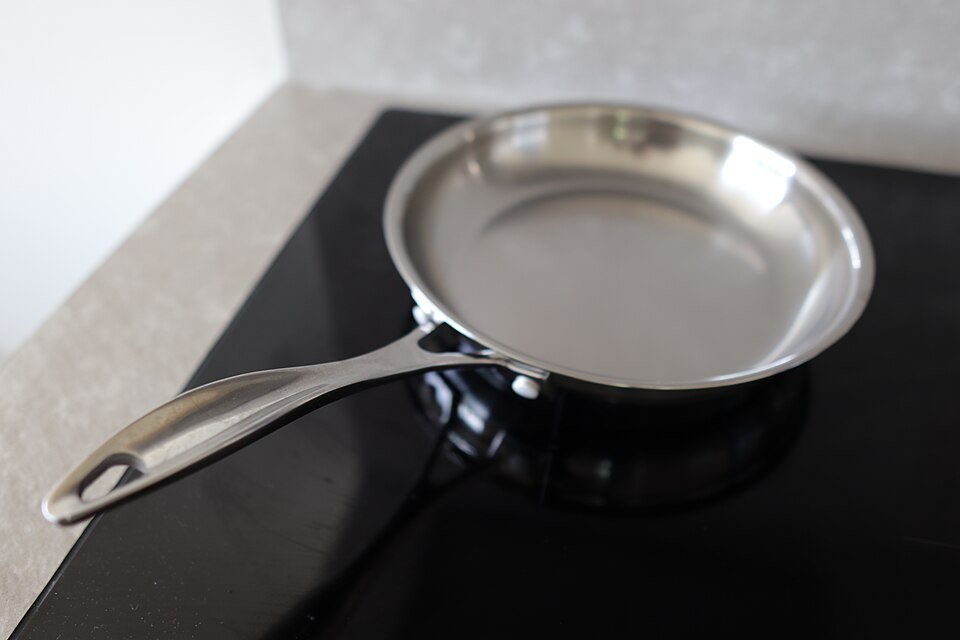
A material search helps frame the question but cannot override product instructions. Two stainless objects can have different construction and washing rules.
Permission is not a cosmetic warranty
Bosch notes that dishwasher-safe wording does not exclude long-term discoloration. Treat it as washing guidance rather than a promise of unchanged appearance forever. Inspect wear and follow advice for damaged items.
Photograph the care label on frequently used pieces. A small record now can prevent confusion when printing becomes difficult to read.
Common questions
Does glass and fork mean dishwasher-safe?
No. Food-contact suitability and washing permission are separate questions.
Does dishwasher-safe promise an unchanged finish?
No. Follow care restrictions and distinguish washing permission from cosmetic durability.
Sources & scope
The linked guidance supports product and care facts; the layouts and worked examples are our practical suggestions. Match the exact item and current instructions. We have not performed durability or cleaning tests on these products.