Research editor: Nicholas Bauer, Founder & Research Editor · Research checked October 6, 2026
The quick answer
Choose a sink caddy by its installed position, not just listed width. Check faucet movement, the mounting surface, lost basin space and access to empty water. Include the height of stored brushes and bottles in the fit check.
Map everything that moves
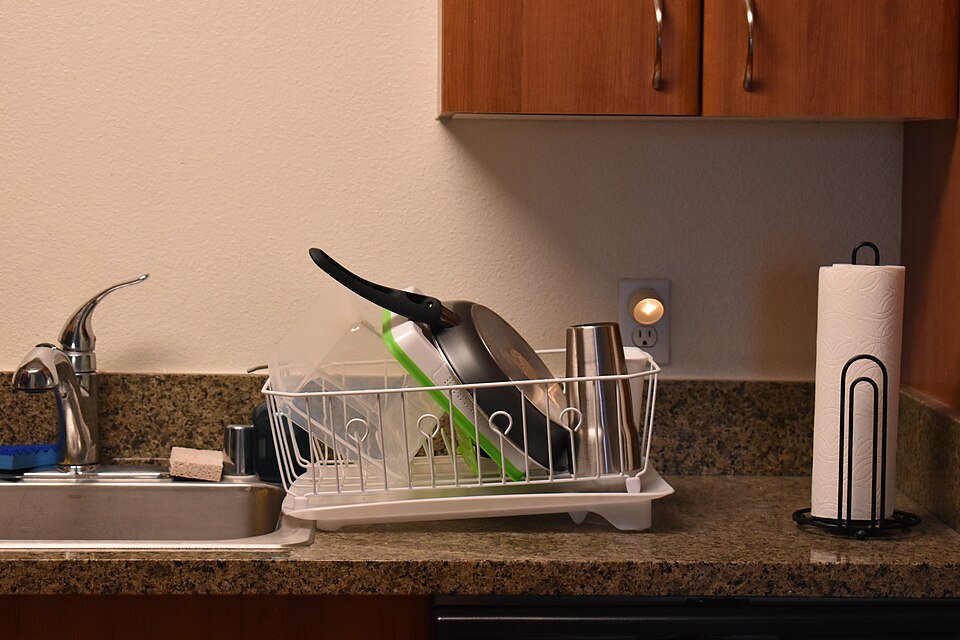
Turn the faucet and handles through their normal range. Check a pull-down head’s docking space if present. Include where your hand needs to reach, not just where the metal moves.
A caddy may fit behind the tap when empty but block a handle once filled with a tall brush. Measure the loaded arrangement.
Compare mounting approaches
| Type | Verify |
|---|---|
| Countertop | Stable footprint, drainage and reservoir removal. |
| Suction-mounted | Compatible surface and basin space it occupies. |
| Hanging | The exact rim, rail or faucet shape it is designed to use. |
Read the actual mounting system
Simplehuman’s cited sink caddy uses suction cups plus a wire hanger resting on the sink ledge. Do not assume it is intended to hang by suction alone or against any curved surface. Follow the exact mounting and surface requirements.
Do not improvise attachment to a faucet, hose or appliance connection unless the accessory is expressly designed for it. An available-looking attachment point does not prove compatibility.
Try a footprint rehearsal
Mark a proposed countertop footprint with removable paper. Place the clean brush and soap bottle in that space. Rehearse faucet use, pan washing and removal of any reservoir.
For example, a six-inch holder fits arithmetically in a seven-inch gap, yet the remaining space may not let you grip its tray. That is an operating-space problem, even though the width measurement passes.
Ask five daily-use questions
- Can you lift a brush without knocking another item into the sink?
- Does pressing the soap pump leave it stable?
- Can your largest everyday pan pass?
- Can water drain or be emptied as designed?
- Can you clean behind and underneath the holder?
When less storage works better
If the organizer blocks washing, move spare supplies away from the sink and reduce what stays beside it. A small holder for one tool may be more useful than a large unit for a whole collection.
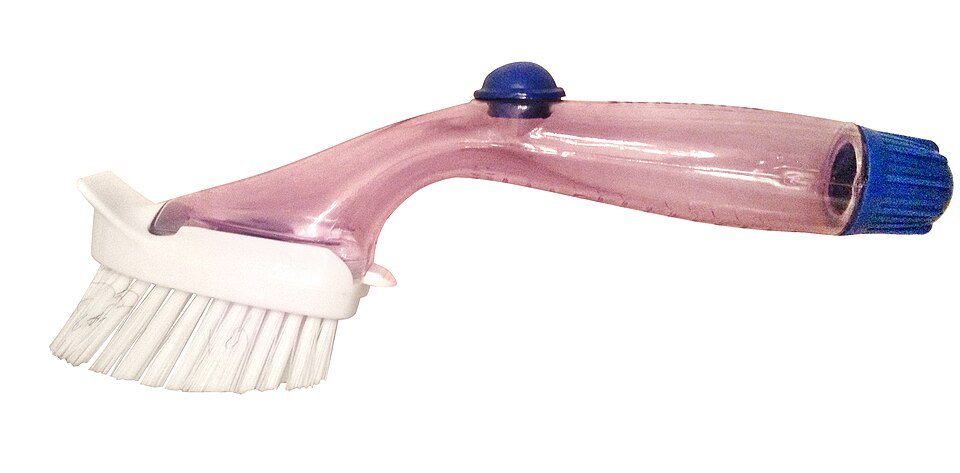
Make the final decision after a normal load of dishes. The product photograph shows a caddy at rest; your sink has to remain usable while people move around it.
Common questions
Do suction cups fit every sink surface?
No. Check the stated surface and mounting requirements.
Should I measure an empty caddy?
Check the loaded height, removal space and cleaning access too.
Sources & scope
The linked guidance supports product and care facts; the layouts and worked examples are our practical suggestions. Match the exact item and current instructions. We have not performed durability or cleaning tests on these products.