Research editor: Nicholas Bauer, Founder & Research Editor · Updated October 16, 2026
The quick answer
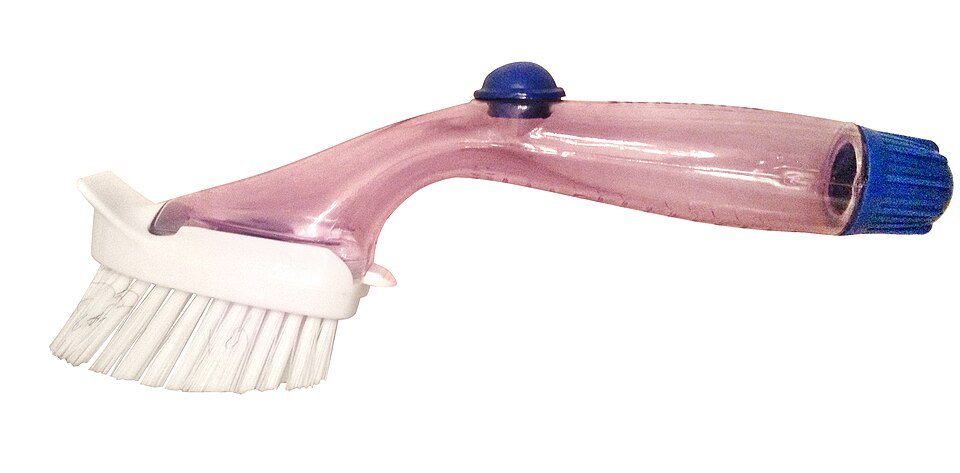
A dish brush helps you reach inside cookware; a sponge offers flexible contact. Neither is automatically safe on every finish. Choose the tool the cookware permits, including any abrasive side or scraper, and follow the tool’s own maintenance instructions.
Is a dish brush more hygienic than a sponge?
A brush can have an advantage when it dries between uses. A 2022 study of used household brushes and sponges found lower bacterial levels overall in brushes. In a separate part of that work, researchers added Salmonella to used utensils: its numbers fell in brushes allowed to dry overnight, but not in brushes kept humid or in the tested sponges under either storage condition.
That supports choosing a tool and storage position that allow drying. It does not prove that every brush is cleaner than every sponge, that an overnight rest sterilizes a tool, or that an “antimicrobial” label replaces cleaning. This was published research on particular utensils and conditions, not testing performed by Small Kitchen Notes.
Research source: Møretrø and colleagues, 2022: bacterial levels in used kitchen sponges and dishwashing brushes, Journal of Applied Microbiology, 133(3), 1378–1391; DOI 10.1111/jam.15621. Reviewed October 16, 2026.
Swipe or scroll sideways to see every column on a small screen.
| Your main task | A useful starting point | The check that still matters |
|---|---|---|
| Deep pots or tall containers | A suitable long-handled brush | Can the head reach without scratching the surface, and can you clean the head and joint? |
| Broad, delicate or coated surfaces | The soft tool allowed by the cookware maker | A sponge’s abrasive reverse or a brush’s scraper may have different permissions. |
| Narrow straws or valves | A correctly sized specialty brush | It must reach the full passage; a general dish brush cannot do that job. |
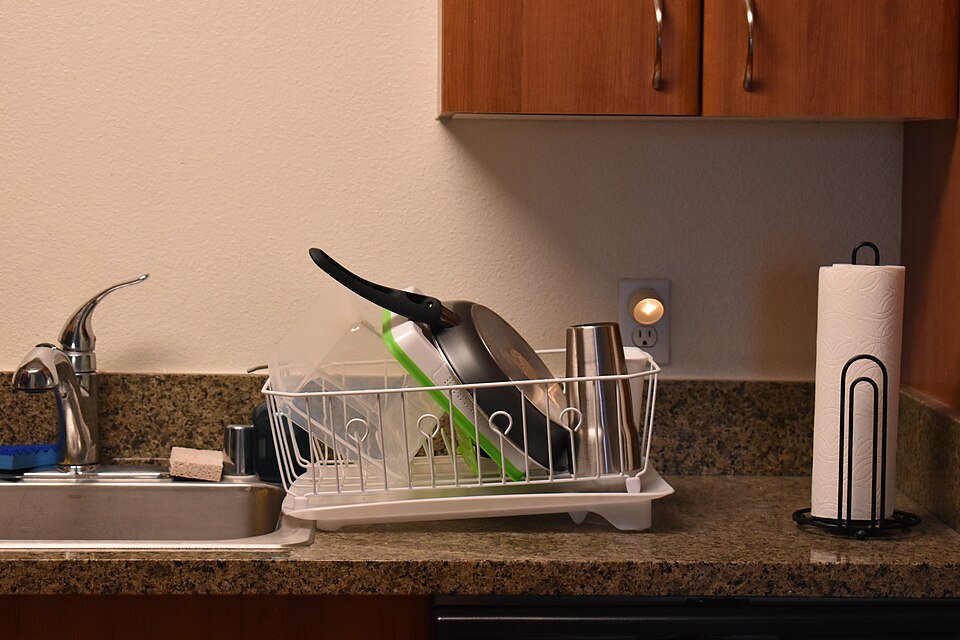
| A cramped, wet sink caddy | Reduce the number of tools and give them separate draining positions | Do not leave the working head sitting in a pool of water. |
A routine that fits a small sink
After the permitted cleaning routine, rinse away remaining debris and place the tool where water can drain and air can reach it. Empty water collected in the holder. Inspect the working surface and joints before the next use. Follow the maker’s replacement instructions and replace a tool that is damaged or cannot be cleaned adequately.
If the manufacturer gives a replacement interval, follow it. Replace sooner when damage or retained residue prevents normal cleaning; waiting for a calendar reminder should not mean continuing to use a deteriorated tool.
Choose for the surface
A soft sponge and an abrasive scouring pad are not interchangeable. Likewise, a brush can have soft bristles plus a harder scraper. Check every surface that will touch nonstick coatings, polished finishes or delicate glass.
First try the cookware maker’s normal cleaning method. If food remains, follow its stuck-food guidance rather than escalating to the toughest scrubber. A more abrasive tool can create a new problem without solving the original one.
Match the tool to the job
| Job | Useful feature | Check first |
|---|---|---|
| Deep pot | A comfortable long handle. | Head fit and surface compatibility. |
| Broad flat pan | Even contact from a suitable soft tool. | Whether every side is safe to use. |
| Bottle or straw | A purpose-sized narrow brush. | Access to the full channel. |
Include maintenance in the purchase
OXO’s cited steel dish brush has a replaceable head and is marked dishwasher-safe. Those are specific model features, not permission to machine-wash every brush. Confirm the replacement head matches before discarding a reusable handle.
For sponges, follow the maker’s cleaning and replacement instructions. University of California guidance advises against using sponges for countertops or raw-meat juices. Give dishwashing tools a defined job rather than treating one sponge as a whole-kitchen cleaning kit.
Inspect condition instead of trusting a calendar alone
Look for retained residue, loose components, a damaged handle or bristles that no longer reach effectively. Replace a tool that cannot be cleaned adequately or used securely. A reminder can prompt inspection, but should not override visible deterioration.
Do not improvise heat or chemical treatments without compatibility directions. Dishwasher-safe is a washing permission, not a promise that every cycle sanitizes the item or that the tool lasts indefinitely.
Keep the everyday set small
Start with the tool your usual cookware needs. Add a narrow brush when bottles or straws require it. Give each a suitable drying position and store unused replacements elsewhere.
For example, a pan brush plus a bottle brush can solve two distinct jobs. Five overlapping scrubbers in one wet cup can make the correct choice harder and leave less room to dry. Buy around the cleaning task, not the number of pieces in a matching set.
Common questions
Is a brush always safe on nonstick?
No. Check the cookware and brush instructions, including any scraper on the head.
Does dishwasher-safe mean a brush never needs replacement?
No. Inspect wear, damage and retained residue.
Sources & scope
The linked guidance supports product and care facts; the layouts and worked examples are our practical suggestions. Match the exact item and current instructions. We have not performed durability or cleaning tests on these products.