Research editor: Nicholas Bauer, Founder & Research Editor · Updated October 16, 2026 · Based on manufacturer documentation, not hands-on testing.
The quick answer
Some mesh strainers are dishwasher-safe, including OXO’s cited three-piece strainer set. Check the complete product, not just the metal mesh. Remove collected food and follow the maker’s care directions; an automatic wash is not proof that every tiny opening is clear.
Two dishwasher-safe examples—and one useful size check
| Product | Documented care | What matters in a small dishwasher |
|---|---|---|
| OXO Good Grips 3-Piece Strainer Set | OXO lists the set as dishwasher-safe. The 3-, 6- and 8-inch strainers have plastic rims. | Nominal basket diameter does not include the handle. Wash with surfaces exposed instead of tightly nesting the set. |
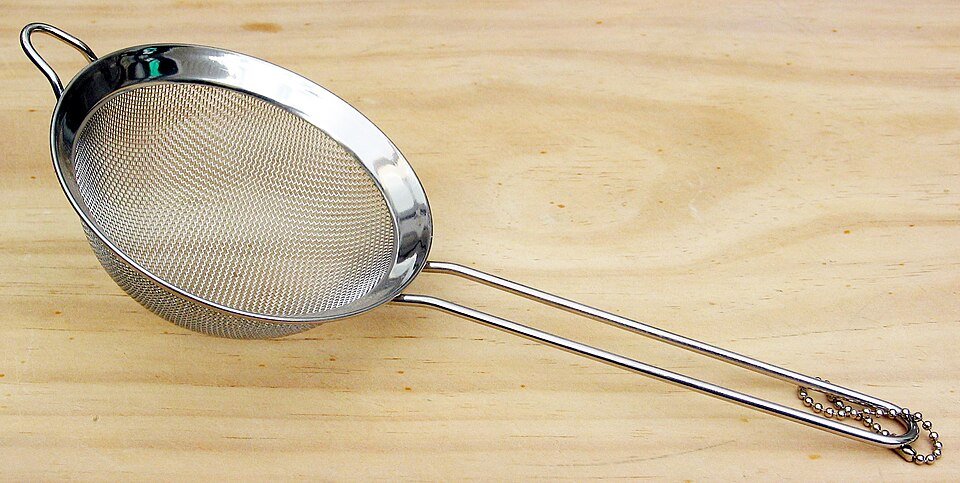
| OXO Good Grips 8-inch Double Rod Strainer, SKU 38991 | OXO lists it as dishwasher-safe and specifies stainless-steel construction with a soft grip. | The published overall size is 15.2 × 8 × 3.5 inches. An “8-inch” strainer therefore needs substantially more than 8 inches along its handle direction. |
| Unidentified, wooden-handled or damaged strainer | Do not transfer either OXO approval to another assembly. Identify its maker and care label. | Check the rim, grip, glued joints and loose wires. If care permission is unknown, use the maker’s support guidance before machine washing. |
Rack check: compare the full handle-to-loop length with the usable rack space, then make sure the spray arm can rotate freely and another dish does not cover the mesh. If the only possible position blocks the wash, clean the strainer separately using its approved method.
Product guidance checked October 16, 2026. Loading advice is our practical interpretation; we have not tested either strainer’s cleaning performance.
Different strainers create different cleanup jobs
A fine sieve used for flour does not leave the same residue as one used for thick puree or sticky grains. Notice what is trapped before choosing the cleaning method. A dry powder and a wet pulp may require different handling under the product’s instructions.
OXO lists its three-piece set as dishwasher-safe and identifies plastic frames with mesh baskets. That example shows why the assembly matters: a mesh material by itself does not tell you how the rim, handle or joints should be washed.
Inspect the food-contact area
| Area | What to look for |
|---|---|
| Mesh center | Visible food remaining in or across the openings. |
| Rim joint | Residue where the mesh meets the frame. |
| Support loop and handle | Damage or looseness that affects secure handling. |
| Individual wires | A sharp broken strand or separation from the rim. |
Do not run bare fingers across damaged wire. A puncture or loose mesh is a replacement or support question, not an invitation to scrub harder.
A practical after-use routine
- Remove the collected solids in an appropriate way before washing.
- Use the manufacturer’s approved cleaning method and tool to address the mesh and rim.
- If machine washing is permitted, place it securely with the food-contact surface accessible to the wash.
- Inspect the result and let the item dry before nesting it tightly with other tools.
A strainer placed directly over a bowl may shield one of the surfaces. Follow the dishwasher’s loading instructions instead of treating nesting as a way to double capacity.
Will the handle fit?
Measure the total length from handle end to support loop as well as the bowl diameter. An eight-inch basket can occupy much more than eight inches of rack or drawer space. Check the proposed position against the spray path and other dishes.
If the tool is used only occasionally, handwashing it may be simpler than rearranging a compact dishwasher around it. If it is used daily, easy access to its mesh and rim should be part of the buying decision.
Choose the mesh for the job you actually do
A very fine sieve can be useful for small particles but may add cleaning effort you do not need for draining large pasta. Compare the tasks, storage footprint and care instructions before buying multiple sizes. One well-chosen strainer and an appropriate colander may serve different jobs better than several almost-identical sieves.
Plan the rest of the load
Use our plate-size and loading guide for the machine-washable items. If you are choosing an appliance, compare the researched countertop dishwasher options after separating out anything that needs handwashing.
Common questions
Can I stack a bowl inside it in the dishwasher?
Do not assume nesting allows both surfaces to wash properly. Follow the appliance’s loading diagram.
Does a metal mesh make the whole strainer dishwasher-safe?
No. Check the handle, frame and assembled product’s care instructions.
Sources & scope
Manufacturer guidance informs the care rules; the kitchen-planning examples are our practical suggestions. Match the exact item and current instructions. We have not performed durability or cleaning tests on these products.